

Cart
0
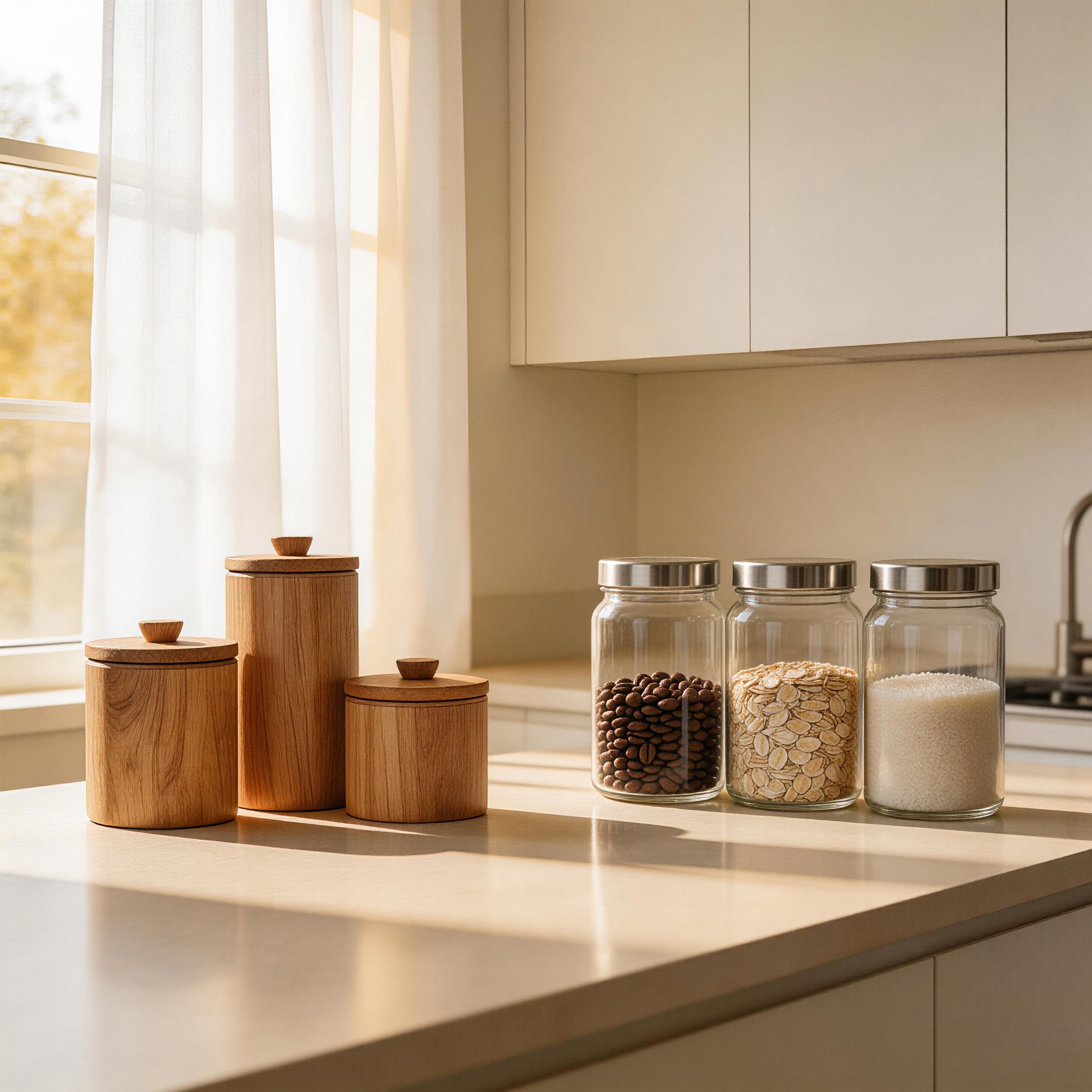
When it comes to organizing your kitchen or home, choosing the right storage containers is more than just a matter of aesthetics—it directly affects food freshness, household hygiene, and daily convenience. Two of the most popular eco-friendly options are wooden storage containers and glass canisters. Each has its unique structural advantages and potential drawbacks.
In this deep dive, we compare these materials across seven critical dimensions—from material science and hygiene to environmental impact—to help you build a kitchen that is both beautiful and functional.

01 Aesthetic Appeal: Warmth vs. Modern Clarity
Wooden Storage Containers: The Organic Vibe
Wood adds an undeniable warmth and natural elegance to any space. Whether you prefer the minimalist lines of Scandinavian design or the rugged charm of a rustic farmhouse kitchen, wooden containers serve as pieces of decor. Because every tree has a different life story, the natural grain and color variations make each container unique. They are perfect for open shelving where you want to create a cozy, "lived-in" atmosphere.
Glass Canisters: The Sleek Professional Look
Glass canisters offer a sleek, modern, and industrial aesthetic. Their primary design advantage is transparency. In a busy kitchen, being able to see your inventory at a glance—knowing exactly how much flour or pasta you have left—is a massive practical benefit. Glass makes a pantry look organized, clean, and uniform.

02 Durability and Longevity: The Resilience Test
The Structural Integrity of Wood
High-quality wooden containers, especially those made from hardwoods like Acacia, Walnut, or Beech, are incredibly durable. They are the "safe" choice for busy households with children because they won't shatter if accidentally knocked off a counter. While wood can develop a beautiful "patina" over time, it does require protection from extreme humidity to prevent warping.
The Fragility of Glass
Glass is non-porous and highly resistant to chemical erosion, but it is physically fragile. While borosilicate glass (often used in high-end canisters) is thermal-shock resistant and tougher than standard glass, it remains susceptible to impact. If longevity to you means "cannot be broken by a fall," wood is the winner. If it means "will not degrade over decades," glass takes the lead.
03 Hygiene and Food Safety: Porous vs. Non-Porous
Is Wood Safe for Food?
Wood is naturally antimicrobial. Research suggests that porous wood surfaces can actually "trap" bacteria and neutralize them. However, wood is "thirsty." If not properly sealed with food-grade oils or beeswax, it can absorb oils from nuts or moisture from the air. This makes wood ideal for dry goods like tea, coffee beans, and dried snacks, but less ideal for "wet" or oily ingredients.
The Sterile Nature of Glass
Glass is the gold standard for hygiene. Being non-porous, it cannot absorb odors, flavors, or bacteria. You can store pungent spices like turmeric in a glass jar one week, wash it, and store delicate white tea the next without any scent transfer. It is dishwasher-safe and can be sterilized in boiling water, making it perfect for long-term storage.

04 Functionality: Freshness and Air-Tight Seals
-
Freshness: Glass canisters often feature silicone gaskets or metal clamps that create a 100% airtight seal, essential for keeping crackers crisp and flour bug-free.
-
Weight: Wooden containers are typically lighter and easier to handle, making them great for items you move frequently, like sugar for your coffee or daily snacks.
-
Space Saving: Glass jars are often designed to be stackable, maximizing vertical space in tight pantries.
05 Environmental Impact: Renewable vs. Recyclable
Both materials are vast improvements over plastic, which leaches chemicals and sheds microplastics.
-
Wood: A renewable resource that sequesters carbon. When a wooden container finally reaches the end of its life (after decades), it is 100% biodegradable and compostable.
-
Glass: Made from abundant natural materials (sand, soda ash, limestone). While glass production is energy-intensive, it is 100% recyclable an infinite number of times without losing quality.

06 Cost Considerations: Investment vs. Value
-
Wooden Containers: Often seen as an "aesthetic investment." Due to the craftsmanship and the cost of sustainable timber, premium wood pieces can be more expensive up-front.
-
Glass Canisters: Generally more budget-friendly and available in bulk sets. They provide excellent functional value for the price.
7. Best Uses
| Material | Best Uses | Notes |
|---|---|---|
| Wooden Storage Containers | Tea, coffee beans, dry snacks, decorative display | Avoid storing wet or oily foods; maintain with oiling |
| Glass Canisters | Flour, sugar, spices, pasta, nuts | Airtight seals keep food fresh longer; dishwasher safe |
Conclusion: Which Should You Choose?
Both wooden storage containers and glass canisters have their merits. Here’s a simple guide:
-
Choose wood if you value natural aesthetics, warmth, and décor.
-
Choose glass if you prioritize hygiene, food freshness, and easy visibility.
Many kitchens benefit from a combination of both—wood for countertop displays and everyday snacks, glass for pantry staples and long-term storage.
08 Pro Tips for Maintenance
For Your Wooden Collection:
-
Avoid Water Satiety: Never soak wooden lids or containers. Wipe with a damp cloth and dry immediately.
-
Seasoning: Every few months, rub the wood with food-grade mineral oil to keep the grain supple and prevent cracking.
-
Breathability: Use wood for items that benefit from slight air exchange, like certain types of tea or garlic.
For Your Glass Collection:
-
Check Seals: Inspect silicone rings regularly to ensure they haven't become brittle, ensuring your airtight seal remains intact.
-
Thermal Shock: Avoid moving glass directly from a freezing pantry to a boiling sterilization pot unless it is borosilicate glass.
-
UV Protection: If storing light-sensitive items like herbs, keep your glass canisters inside a dark cupboard rather than on a sunny windowsill.
Conclusion: Why Not Both?
The most organized and beautiful kitchens rarely rely on just one material. A hybrid approach is often best:
-
Use Wooden Containers for countertop displays, bread boxes, and frequently accessed snacks to add texture and warmth to your kitchen’s "look."
-
Use Glass Canisters for your "warehouse" storage—the pantry staples like flour, rice, and beans where freshness and visibility are the top priorities.
By carefully choosing the right storage solution, you combine style, convenience, and sustainability. Whether it’s the rustic soul of wood or the clinical clarity of glass, the right container makes your home organization journey a joy.
👉 [Explore our Handcrafted Wood Storage Collection] 👉 [Discover Sustainable Kitchen Essentials from Oakory]

