

Cart
0
At Oakory, we believe a cutting board is more than just a kitchen tool—it is a bridge between nature and your home. While mass-produced boards are often rushed through factories using harsh chemicals and synthetic glues, our process is defined by patience, sustainability, and traditional craftsmanship.
Why choose a handcrafted wooden board? Unlike plastic, which can harbor bacteria in deep knife scars and shed microplastics into your food, or factory-wood that cracks easily due to rapid kiln-drying, the Oakory journey takes up to 24 months. This slow-paced approach ensures your board remains a durable, safe, and beautiful kitchen heirloom rather than a disposable tool.
01 The Origin: Forest Selection and Stewardship
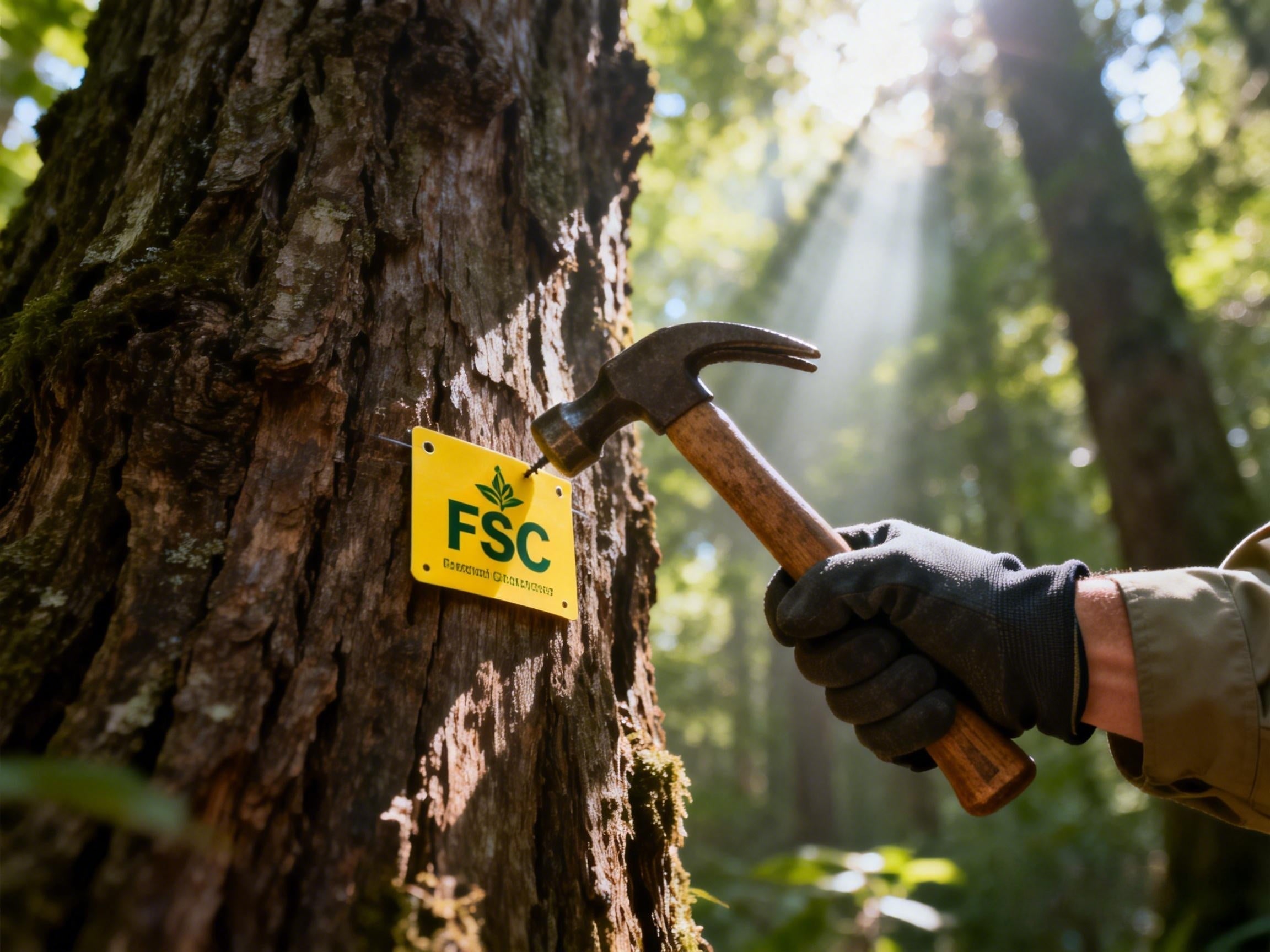
Every Oakory cutting board begins with a deliberate choice made deep in the forest. All the forests we work with are FSC® (Forest Stewardship Council) certified, meaning that for every tree harvested, at least two new saplings are planted to ensure the ecosystem remains vibrant for generations.
Wood selection follows a strict ecological principle: we only use trees that have completed their natural lifecycle or require thinning to improve forest health. We prioritize species known for their natural antibacterial properties and durability, such as Black Walnut, Hard Maple, and Cherry. Once selected, each tree is carefully marked and documented—its location, species, and diameter are all recorded for full traceability.
Pro Tip: Harvesting takes place exclusively in autumn and winter. During these months, trees are dormant and moisture levels are at their lowest. This scientific timing naturally reduces the internal tension of the wood, significantly lowering the risk of warping or cracking later in your kitchen.
02 Stage One: Initial Processing and Natural Air-Drying
After harvesting, logs are transported to a local sawmill where they are cut into "rough stock." Air-drying is the soul of our process. Instead of forcing moisture out in a few days (which weakens wood fibers), we stack our boards in well-ventilated shelters for 12 to 24 months.
During this extended period, moisture evaporates slowly and evenly. This "slow-aging" allows the wood to stabilize naturally. Once air-drying is complete, we use a precision-controlled kiln to fine-tune the moisture content to exactly 8–10%. This specific range is the gold standard, ensuring the board won't shrink or expand excessively when exposed to the varying humidity of a modern kitchen.
03 Stage Two: Strategic Design and Precision Cutting
Dried wood then enters the design phase, where "reading the grain" becomes an art form. Our designers evaluate each board to decide its best use:
-
Long-Grain Boards: These showcase the flowing beauty of the wood's growth and offer maximum structural stability for heavy-duty daily prep.
-
End-Grain Boards: Often called "Butcher Blocks," these are cut perpendicular to the growth rings. This orientation allows the wood fibers to "part" when the knife hits and then "heal" back together, making them incredibly gentle on your premium knives and highly resistant to scarring.
Our Zero-Waste Commitment: We respect every inch of the tree. Larger offcuts are transformed into serving paddles or coasters, while the finest wood scraps are collected and repurposed or sent to local biomass facilities.
04 Stage Three: Hand Sanding—The Touch of a Craftsman
While machines do the initial shaping, the finish is strictly human. Each board is sanded by hand through at least six different grits—starting at a coarse 80 grit and progressing meticulously up to a ultra-fine 600 grit.
True hand sanding respects the “character” of the wood. Our craftsmen work strictly with the grain, never against it, to avoid micro-tearing the fibers. This labor-intensive process ensures that even after you wash the board at home, the surface remains silky-smooth and won't develop that "fuzzy" texture common in cheaper, machine-sanded products.
05 Stage Four: Deep Conditioning with Food-Safe Finishes
To ensure your board is ready for food contact the moment it arrives, it undergoes a deep-conditioning treatment. We use a proprietary blend of 100% natural, food-grade mineral oil and organic beeswax.
The mixture is gently heated until liquid, then applied to every surface. The warm oil penetrates deep into the wood pores, while the beeswax creates a natural, hydrophobic seal. This dual-layer protection prevents water, blood, and juices from soaking into the wood, effectively inhibiting the growth of mold and bacteria.
06 Stage Five: Quality Inspection and Global Traceability
Before any board leaves our workshop, it undergoes a rigorous final inspection. We check for surface uniformity, safely rounded edges, and structural integrity. Approved boards are laser-etched with a unique identification number.
This ID allows you to trace your specific board back to its forest of origin. We believe that when you know the story of your board—from the winter harvest to the craftsman who sanded it—you naturally value and care for it more. Each piece is wrapped in a reusable cotton cloth bag and shipped in 100% recycled packaging.
Frequently Asked Questions (FAQ)
1. Is wooden tableware more hygienic than plastic? Yes. Studies have shown that wood has natural antimicrobial properties. While bacteria can hide in the deep grooves of a plastic board, wood fibers tend to "trap" and suffocate bacteria, making them a much safer choice for daily kitchen use.
2. How do I maintain the "Forest to Kitchen" quality at home? Maintenance is simple but vital. Never soak your board or put it in the dishwasher. Wash with warm soapy water, dry immediately, and apply a food-safe wood conditioner or mineral oil every 4-6 weeks to keep the wood hydrated and protected.
3. What should I do if my board starts to feel dry? Don't worry! This is a natural characteristic of organic material. Simply apply a generous layer of food-grade mineral oil, let it sit overnight, and buff away the excess. Your board will look as good as new.
4. Why is FSC® certification so important? FSC® certification is the "gold standard" for responsible forestry. It ensures that the wood is harvested in a way that protects biodiversity, indigenous rights, and the long-term health of the forest. By choosing Oakory, you are actively participating in global reforestation efforts.
Experience the Craftsmanship
The journey from a dormant winter tree to a finished kitchen masterpiece is a testament to our love for nature. We invite you to feel the difference that 24 months of patience and hand-craftsmanship make.
[Explore the Oakory Collection of Sustainable Cutting Boards]

