

Cart
0
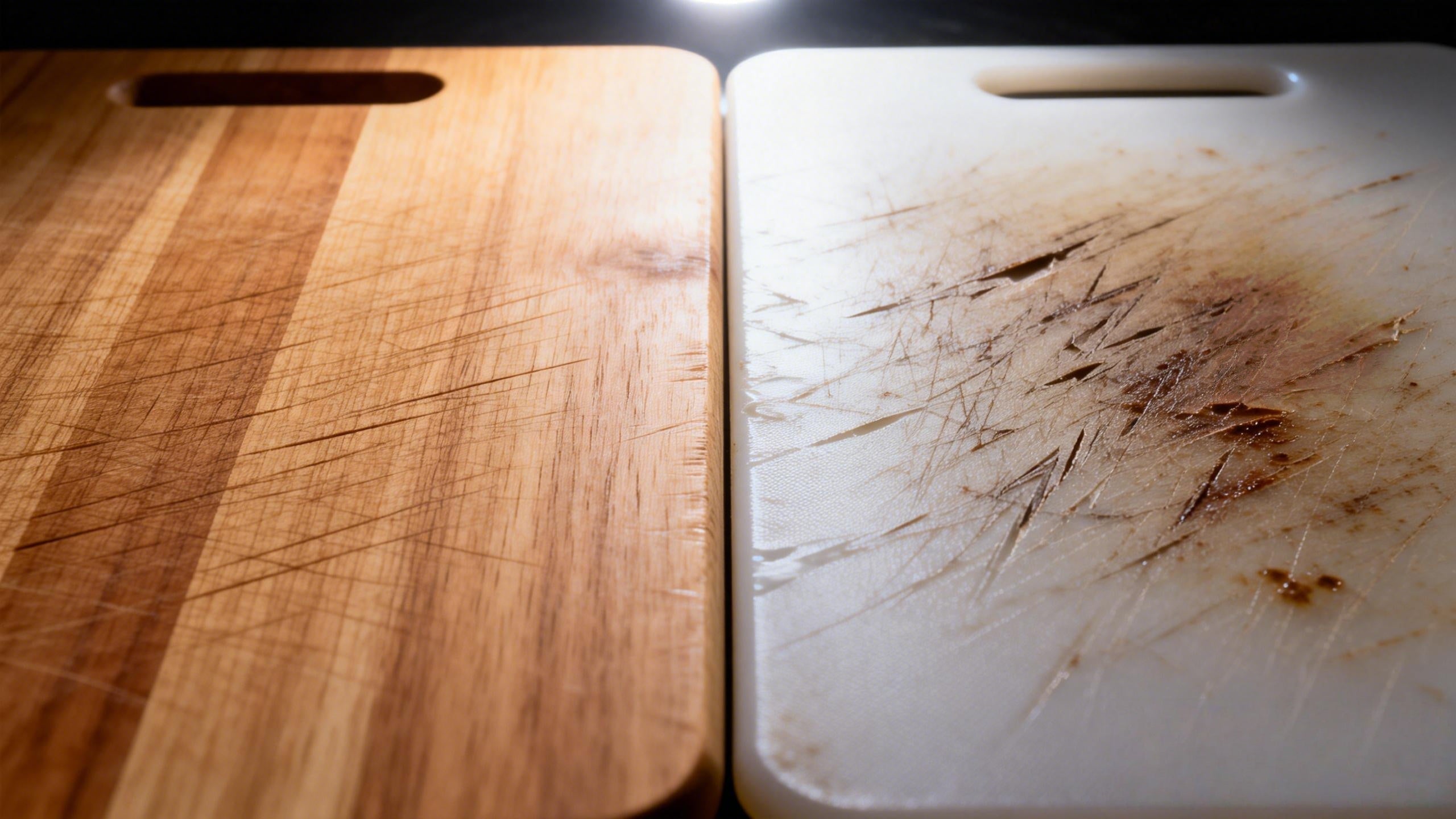
The cutting board is one of the most frequently used tools in the kitchen—yet few people realize how much this simple choice can affect food safety, durability, and overall cooking experience.
In a study examining hygiene conditions in household kitchens, researchers found something surprising: wooden cutting boards often harbor fewer harmful bacteria than plastic ones.
Picture a sunlit kitchen. On the countertop, a warm, natural wooden cutting board sits beside a brightly colored plastic one. You pick up your knife to prepare dinner, unaware that this seemingly minor decision may quietly influence your family’s health and the way your kitchen functions every day.
01 The First Choice: Core Considerations for Kitchen Tools
Every day, millions of households around the world use cutting boards to prepare food. According to data from the U.S. Department of Agriculture, an average household processes up to one metric ton of food on cutting boards each year.
This everyday surface does more than support our meals—it plays a crucial role in food safety and kitchen efficiency.
When choosing a cutting board, most people focus on three key factors: hygiene, durability, and user experience.
-
Hygiene determines food safety
-
Durability determines long-term value
-
User experience directly affects cooking comfort and efficiency
However, wooden and plastic cutting boards perform very differently across these dimensions. Even more surprisingly, many long-held assumptions are contradicted by modern scientific research.
02 The Hygiene Debate: A Microscopic Battle Between Wood and Plastic
When it comes to hygiene, wooden and plastic cutting boards often defy intuition. Many people assume plastic is more sanitary due to its smooth surface—but science tells a different story.
A groundbreaking study conducted in 1993 by the University of California, Davis, revealed that wooden cutting boards possess natural antibacterial properties. Although wood’s porous structure appears likely to trap bacteria, those pores actually draw bacteria inward through capillary action.
Once inside, bacteria quickly die due to dehydration. The study found that under identical conditions, bacterial counts on wooden cutting boards dropped significantly within three hours, while bacteria on plastic boards survived much longer.
Subsequent research reinforced these findings. Germany’s Federal Institute for Risk Assessment reported that natural compounds in wood, such as tannins, can inhibit common foodborne pathogens.
Plastic cutting boards, on the other hand, develop knife scars over time. These microscopic grooves become ideal hiding places for bacteria—areas that routine cleaning often fails to reach.
03 Durability Compared: Long-Term Value and Performance
Durability is another critical factor—and here, plastic’s reputation for toughness can be misleading.
Most plastic cutting boards are made from polyethylene or polypropylene. Repeated contact with sharp knives produces tiny plastic fragments that may mix with food. Over time, the surface becomes heavily scarred, creating a breeding ground for bacteria and making thorough cleaning increasingly difficult.
Wooden cutting boards also develop knife marks, but wood fibers have a degree of natural elasticity. Many cuts partially close over time, and wooden boards are typically thicker. Even when worn, they can be resurfaced through sanding and restored to a smooth finish.
A well-made maple or walnut cutting board, when properly maintained, can last ten years or more, whereas plastic boards often need replacement after just one or two years.
From an investment standpoint, a high-quality wooden board may cost more initially but proves more economical in the long run. More importantly, wooden boards do not release microplastics into food as plastic boards can over time.
04 Real-World Use: The Cooking Experience
In daily kitchen use, the differences between wood and plastic become even more apparent. Surveys of professional chefs and home cooks show that over 70% prefer wooden cutting boards.
One major reason is knife friendliness. Wood’s natural resilience grips the blade slightly, reducing slippage and minimizing knife wear. Plastic’s harder surface tends to dull knives more quickly.
Wood also provides a more stable, pleasant cutting feel. The blade meets the surface with a soft, controlled resistance and produces less noise. Plastic boards often create sharp cutting sounds, and ingredients are more prone to slipping.
Functionally, wooden boards are more versatile. Beyond chopping, they can double as serving boards for cheese, bread, or charcuterie—eliminating unnecessary transfers. Plastic boards rarely serve this dual purpose effectively.
05 Beyond the Surface: Broader Impacts of Your Choice
The choice of a cutting board extends beyond kitchen mechanics—it reflects broader lifestyle values.
Environmental impact is significant. Plastic cutting boards are derived from petroleum, generate higher carbon emissions during production, and can take hundreds of years to degrade. Wooden boards, especially those sourced from sustainably managed forests, are renewable and far more eco-friendly.
Health considerations also matter. Plastic boards may release chemical additives when exposed to heat or acidic foods, particularly as the surface wears. The U.S. Food and Drug Administration has noted that certain plastic additives can migrate into food over time.
Wooden boards pose no such risk. Natural wood is typically finished with food-safe oils or waxes, making it a safer choice.
Aesthetic value is often overlooked. Wooden cutting boards add warmth and natural texture to a kitchen. With proper care, they develop a rich patina and unique grain over time—becoming a functional piece of kitchen décor.
06 Cleaning and Maintenance: The Key to Longevity
Regardless of material, proper cleaning and maintenance are essential for hygiene and durability.
For wooden cutting boards, always dry them immediately after washing and apply food-grade mineral oil regularly to prevent cracking and bacterial growth. Maintaining balanced moisture is crucial—excess dryness causes splits, while prolonged dampness encourages mold. Monthly oiling helps keep the wood healthy.
Plastic cutting boards may seem easier to clean, but they present their own challenges. The U.S. National Sanitation Foundation recommends disinfecting plastic boards with a diluted bleach solution, especially when heavily scarred. However, this can accelerate material degradation, leading to more frequent replacement.
One common misconception is that dishwashers offer the best cleaning solution. In reality, dishwashers can damage wooden boards and speed up plastic aging. Hand washing with hot water and thorough drying remains the best practice for both types.
Back in that sunlit kitchen, the warm wooden cutting board rests quietly on the counter. Every mark on its surface tells a story of health, durability, and thoughtful choice.
Modern science continues to confirm that wood’s advantages go far beyond appearance. From antibacterial properties and environmental sustainability to knife protection and long-term value, wooden cutting boards consistently outperform plastic across multiple dimensions.

