

Cart
0
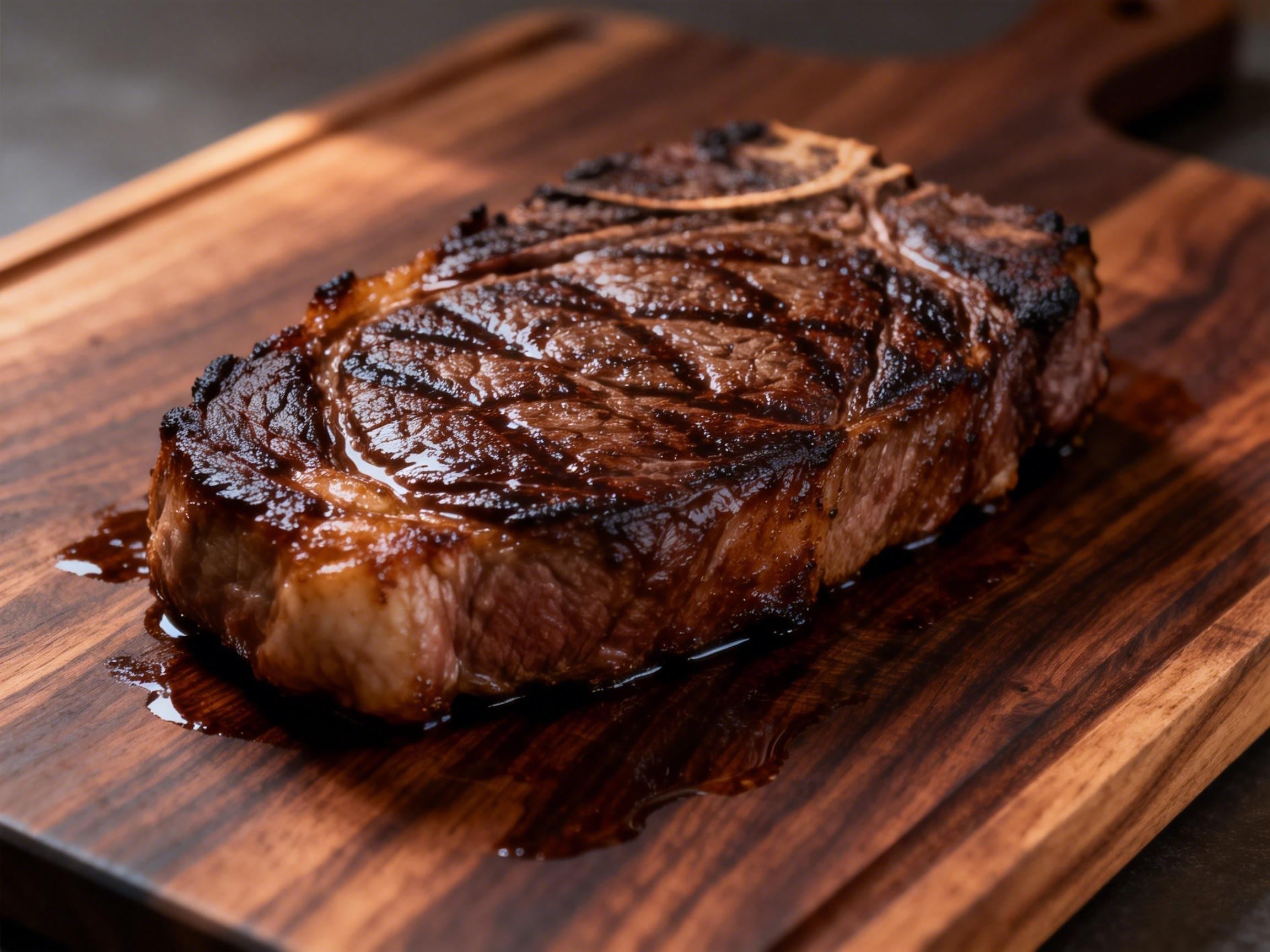
When a premium Wagyu steak is placed on the wrong cutting board, it can lose up to 30% of its value—while the right wooden steak cutting board is not just a tool but an integral part of the flavor experience.
High-end restaurant kitchens guard a secret: the final journey of a perfect steak, from pan to plate, must be completed on a specific wooden cutting board.
This isn’t just about presentation aesthetics—when the searing-hot steak meets the warm, smooth wooden surface, a series of subtle physical and chemical changes occur: juices are better retained, the crispy crust is protected, and even a hint of wood aroma enhances the dining experience.
01 The Science of the "Resting" Phase
Why does wood outperform all other materials for steak? It comes down to Thermodynamics and Capillary Action.
-
Thermal Buffering: Wood acts as an insulator. Unlike cold marble or steel, which shocks the meat and causes muscle fibers to contract (squeezing out juices), wood maintains the steak's internal temperature gradients.
-
Capillary Absorption: The microscopic pores in wood act as a "buffer" for surface moisture.
-
Auditory Tenderness: The "thud" of a knife on wood versus the "clink" on ceramic changes the diner's psychological perception of the meat's texture.
02 Wood Selection Matrix: Choosing Your Material
Not all hardwoods are created equal. Use this table to match your board to your specific steak-cutting style.
The "End Grain" Advantage
If you are serious about your knives, End Grain is the only choice. In an end-grain board, the wood fibers stand vertically (like a bundle of straws).
Pro Tip: When the knife hits an end-grain board, it slides between the fibers rather than cutting across them. This is why end-grain boards are "self-healing."
| Wood Type | Hardness (Janka Value) | Antibacterial Properties | Maintenance Needs | Best Use Scenarios | Aesthetic Features |
|---|---|---|---|---|---|
| Black Walnut | 1010 | High | Medium | Top steak houses, presentation dining | Deep chocolate brown, straight grain with wavy patterns, luxurious |
| Maple | 1450 | Very High | Low | High-frequency professional kitchens, daily home use | Light cream color, fine and even grain, one of the most hygienic options |
| Acacia | 1750 | High | Low | Heavy-duty use, bone-in steak handling | Golden to dark brown, interlocked grain, extremely durable |
| Cherry | 950 | Medium | High | Mid to high-end homes, low-temperature steaks | Reddish-brown darkens over time, elegant grain, requires careful maintenance |
| End Grain Boards | Varies by wood | Very High | Medium | Professional butchery,追求极致耐用性 | Made from wood cross-sections, extremely resistant to knife marks but may be heavy |
Special Consideration: End Grain Boards
End grain boards are the gold standard in professional settings. The wood is cut perpendicular to the grain, allowing the knife blade to fall between the fibers rather than cutting through them. This significantly reduces knife marks, extends the board’s lifespan, and offers self-healing properties—minor cuts partially close due to the wood’s elasticity.

03 The "Board Initiation" Ritual
A new premium board is "thirsty." Before the first steak touches it, you must saturate the fibers to create a hydraulic seal against bacteria and blood.
-
Warm Oil Saturation: Heat food-grade mineral oil to 55°C. Warm oil has lower viscosity and penetrates 30% deeper into the wood grain.
-
The Greenhouse Effect: Wrap the oiled board in plastic wrap for 72 hours. This forces the oil into the heartwood.
-
Beeswax Cap: Seal the surface with a "Board Butter" (4:1 ratio of mineral oil to beeswax). Use a hairdryer on low heat to buff the wax into the pores.
04 Professional Maintenance & Hygiene
To keep a board for 15+ years, you must manage its "Internal Microclimate."
Weekly Deep Clean: The Lemon-Salt Scrub
-
Step 1: Sprinkle coarse sea salt (abrasive).
-
Step 2: Scrub with half a lemon (acidic disinfectant).
-
Step 3: Rinse with water below 40°C. High heat strips the protective wax you worked so hard to apply.
The Moisture Metric
Wood is hygroscopic. It swells in summer and shrinks in winter.
-
Ideal Moisture Content: $8\% - 12\%$.
-
If your board sounds "hollow" when tapped, the moisture has dropped below $8\%$, and it is at high risk of cracking. Immediately apply a heavy coat of oil.

05 Purchase Inspection Checklist
Before you buy, perform these four "Shop Floor" tests:
-
[ ] The Wobble Test: Place it on a flat granite counter. Press the corners. Any movement indicates a warped core.
-
[ ] The Weight-to-Volume Ratio: A $30\text{cm} \times 45\text{cm}$ board should feel heavy. If it’s light, the wood was likely kiln-dried too fast, making it brittle.
-
[ ] The Grain Direction: Ensure the grain runs parallel to the long edge to prevent "cupping."
-
[ ] The FSC Stamp: Ensure the wood is sustainably harvested. Premium steak deserves an ethical foundation.
06 Upcycling: When to Say Goodbye
When a board develops a through-crack (where light passes through), it can no longer be sanitized safely.
Creative Reuse: Don't throw it away. A retired steak board with deep knife marks makes a stunning rustic cheese board or a base for a cast-iron skillet presentation, where the "scars" of previous steaks add to the storytelling of your kitchen.
07 End-of-Life Assessment and Upcycling
Even with meticulous care, all wooden cutting boards eventually reach the end of their service life:
Retirement Signals
-
Knife marks deeper than 5 mm covering over 30% of the surface.
-
Visible through-cracks (light passes through).
-
Severe surface unevenness that cannot be restored by sanding.
-
Persistent, unremovable odors.
Eco-Friendly Recycling Options
Retired steak cutting boards should not be discarded directly:
-
Biodegradation: Cut into small pieces and bury in the garden as slow-release organic matter.
-
Craft Conversion: Repurpose intact sections into cheese boards, coasters, or decorative items.
-
Professional Recycling: Some woodworking studios accept old boards for making small wooden items.
 Upgrading Timing
Consider upgrading your board when your cooking skills advance or you start handling higher-quality meats:
-
From everyday maple to presentation-grade black walnut.
-
From flat grain to end grain.
-
Adding dedicated boards: e.g., for Japanese Wagyu or Dry-Aged steaks.
The difference between a premium wooden steak cutting board and an ordinary one is like the difference between a professional steak knife and a regular dinner knife—it doesn’t change the food’s essence but significantly enhances the quality and precision of the entire experience.
This investment pays off not only in the board’s lifespan (up to 15+ years with proper care) but also in the flawless presentation of every steak it touches.
Ultimately, this board becomes part of your kitchen narrative—its sheen records your culinary progress, its grain witnesses important moments you’ve hosted, and its subtle wood aroma infuses those memorable dinners.
Choosing and maintaining a wooden steak cutting board is essentially a commitment to the philosophy of "cooking as a complete experience"—where every detail, from heat control and cutting technique to final presentation, matters equally.

