

Cart
0
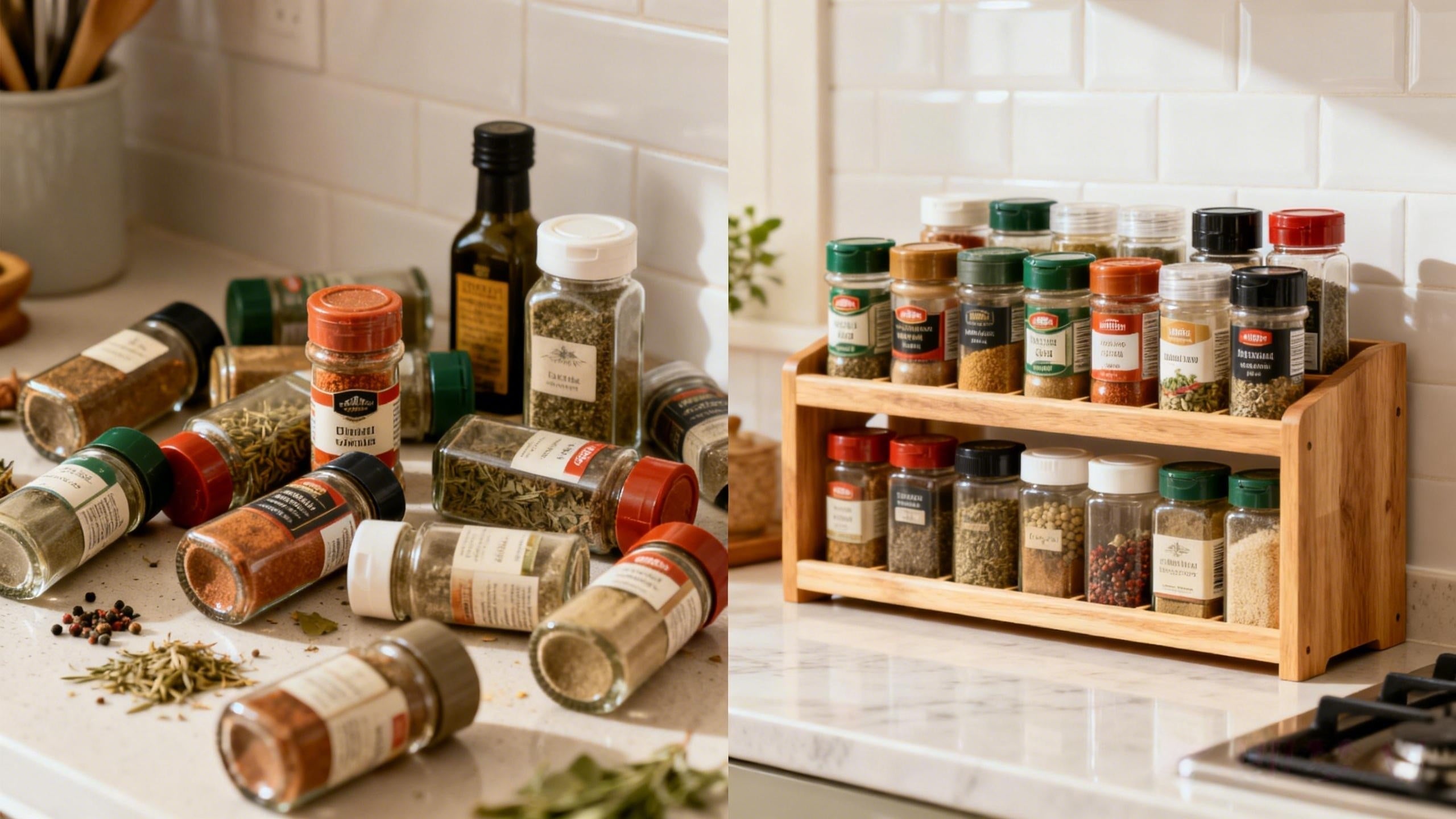
A well-organized kitchen isn’t just about convenience—it’s about the emotional resonance of the space. Among all kitchen organizers, spice racks play a surprisingly pivotal role. Unlike pantry bins hidden behind doors, spice racks often sit at eye level, are touched multiple times a day, and quietly define your kitchen’s aesthetic personality.
When choosing a spice rack, the decision usually comes down to two materials: Natural Wood and Industrial Metal. Both have their functional strengths, but they create vastly different culinary experiences. In this guide, we break down the comparison in a practical, real-life way to help you choose the one that aligns with your lifestyle.

01 Aesthetic and Design Impact: Atmosphere vs. Efficiency
Wooden Spice Racks: The Soul of the Kitchen
Wooden spice racks (crafted from materials like Acacia, Walnut, or Bamboo) bring an organic softness to the kitchen. They align with the concept of "Warm Modernism," providing a visual "soft landing" against the hard surfaces of tile and marble.
-
Design Styles: Perfect for Scandinavian, Japandi, Farmhouse, or Rustic aesthetics.
-
The Lived-in Feel: Wood doesn’t scream for attention; it absorbs light and blends into its surroundings, making the kitchen feel more like a living space and less like a laboratory.
Metal Spice Racks: The Professional Edge
Metal racks—whether stainless steel, wrought iron, or matte black powder-coated—lean toward an industrial or ultra-modern vibe. They are visually crisp and provide a sense of professional efficiency.
-
Design Styles: Ideal for Contemporary, Industrial, or High-Tech kitchens.
-
Visual Accents: Metal often acts as a sharp visual accent, providing a clean contrast that highlights the colors of the spices within the jars.

02 Functional Performance: The Daily User Experience
| Feature | Wooden Spice Rack | Metal Spice Rack |
|---|---|---|
| Grip & Stability | Naturally anti-slip | Can be slippery |
| Noise | Quiet | Jars may clink |
| Touch Feel | Warm & soft | Cool & hard |
| Heat Sensitivity | Stable | Can heat up near stove |
Wood excels in everyday comfort—especially if your spice rack sits close to the cooking zone. Metal, while sturdy, can feel less forgiving in daily handling.
03 Durability and the "Patina" Factor
The Longevity of Wood
A well-made wooden spice rack is a lifetime investment. While wood is sensitive to extreme moisture, it is highly resistant to minor scratches. In fact, wood "ages gracefully." Over the years, it develops a patina—a natural glow that enhances its beauty. If the surface becomes dull, a quick application of food-grade oil can restore its original luster instantly.
The Maintenance of Metal
Metal racks are highly resistant to moisture and steam, making them easy to wipe clean in "messy" kitchens. However, they are prone to visible wear. If the powder coating chips or the stainless steel scratches, the flaws are immediately obvious and often impossible to repair. In humid environments, lower-quality metal racks may eventually develop rust at the joints.
04 Sustainability and Environmental Footprint
As we move toward more eco-conscious living in 2026, the material source of our kitchen tools carries more weight.
-
Renewable Wood: When sourced from FSC-certified forests, wood is a renewable and carbon-sequestering material. It is biodegradable at the end of its life, ensuring it doesn't contribute to landfill waste.
-
Industrial Metal: Metal production is energy-intensive and often involves chemical treatments and synthetic coatings. While metal is recyclable, the "embodied energy" required to produce it is significantly higher than that of traditional woodcraft.

05 Placement and Microclimate Management
Where you place your spice rack is just as important as the material itself.
-
Near the Stove: If your rack is within one meter of the stove, Wood is the safer choice as it does not conduct heat into the spice jars, which can cause spices to lose their volatile oils.
-
Inside Drawers: Wooden drawer inserts are quieter and prevent jars from sliding around during the opening and closing of drawers.
-
Wall Mounted: Metal often excels in wall-mounted or magnetic solutions where weight-bearing and thin profiles are necessary.
06 Frequently Asked Questions (FAQ)
Q: Do wooden spice racks absorb kitchen odors? A: If properly sealed with a food-grade finish, wood will not absorb odors. The spices themselves are sealed in jars, and the wood acts only as a supportive structure.
Q: Is it hard to clean grease off a wooden rack? A: Not if it’s treated. A simple wipe with a damp cloth and mild soap is sufficient. For stubborn grease, a mixture of vinegar and water works wonders on wood without damaging the finish.
Q: Which material is better for spice longevity? A: Wood is slightly superior because it acts as a thermal buffer, keeping spices at a more consistent temperature compared to metal, which can fluctuate rapidly with the kitchen air.

Final Verdict: Efficiency vs. Experience
A spice rack is more than just storage; it’s an extension of your daily cooking ritual.
-
Choose Metal if your primary goal is sleek, modern efficiency and easy, "rinse-off" cleaning.
-
Choose Wood if you value the tactile experience, visual warmth, and a kitchen that feels grounded in nature.
At Oakory, we believe that if metal is about efficiency, wood is about the experience. In a space as personal as the kitchen, the experience often matters most.
👉 [Explore our Handcrafted Wooden Spice Rack Collection] 👉 [Discover More Sustainable Kitchen Organization Tips]

