

Cart
0
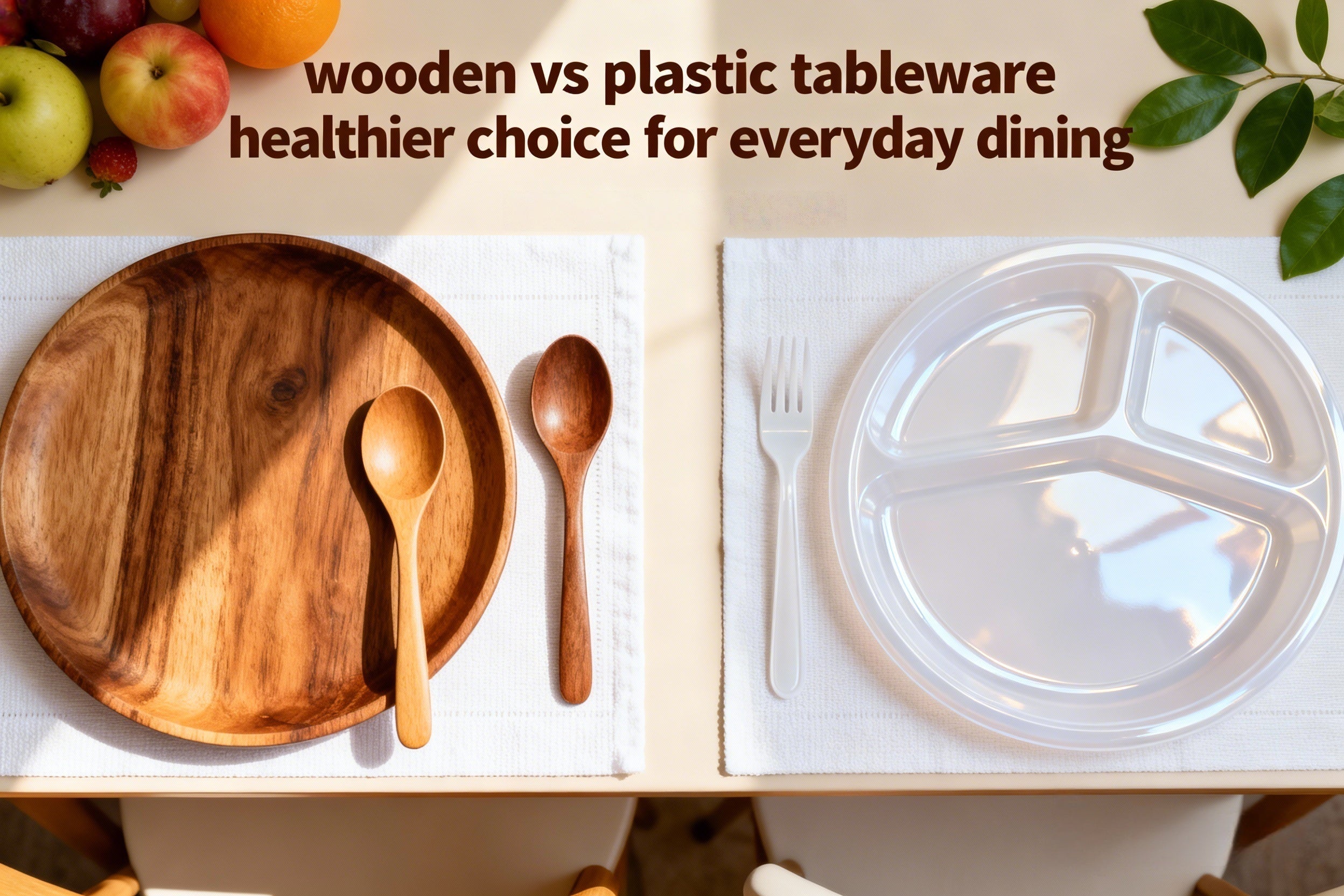
When choosing tableware for everyday use, many households find themselves at a crossroads: wooden tableware vs. plastic tableware. Plastic is undeniably cheap, colorful, and lightweight, while wooden bowls, plates, and spoons feel natural, warm, and timeless.
But as we become more conscious of what goes into our bodies and how our choices affect the planet, the question becomes urgent: When it comes to health, safety, and long-term durability, which one is truly the better choice for your family? In this comprehensive guide, we’ll explore the hidden chemistry of plastics, the natural antimicrobial power of wood, and the environmental footprint of both materials to help you make an informed decision for your daily dining ritual.
01 Health & Food Safety: The Chemical Reality
Plastic Tableware: The Risk of "Leaching"
Most modern plastic tableware is made from petroleum-based polymers. To make these plastics flexible, colorful, or heat-resistant, manufacturers add various chemical stabilizers.
-
BPA & Phthalates: These are well-known endocrine disruptors. Even "BPA-Free" plastics often use BPS or BPF, which studies suggest may carry similar hormonal risks.
-
Microplastics: Every time a metal fork scrapes a plastic plate, or a plastic bowl is heated in the microwave, thousands of microscopic plastic particles are released. These "microplastics" can accumulate in the human body over time.
-
The Heat Factor: Plastic is particularly vulnerable to heat. When exposed to hot soups or acidic dressings, the chemical bonds in the plastic can weaken, allowing toxins to migrate directly into your food.
Wooden Tableware: The Inert Alternative
High-quality wooden tableware is a "biogenic" material. It is made from solid hardwoods like Acacia, Beech, or Maple and finished with natural, food-grade oils.
-
Non-Reactive: Wood does not react with acidic foods (like tomatoes or lemon) or high heat.
-
Zero Synthetic Additives: Because wood is a single-piece organic material, there are no "fillers" or chemical stabilizers that can leach into your meals.
-
Century-Tested: Humans have used wooden vessels for millennia. It is a material our bodies and the environment recognize and process safely.
02 Hygiene & Bacteria: Debunking the Porosity Myth
A common misconception is that because wood is "porous," it must be a breeding ground for bacteria, whereas "smooth" plastic is cleaner. Scientific research proves the exact opposite.
The "Scratch" Trap in Plastic
While new plastic looks smooth, it is soft. Within weeks of daily use, it develops thousands of microscopic scratches from cutlery. These crevices are the perfect size for bacteria to hide in, shielding them from soap and water during a standard wash.
The Antibacterial Power of Wood
Wood is naturally antimicrobial. Its porous structure actually works in its favor:
-
Capillary Action: When bacteria land on a wooden surface, they are drawn into the interior of the wood.
-
Desiccation: Once inside the fibers, the bacteria are deprived of the moisture they need to survive.
-
Natural Tannins: Many hardwoods contain natural acids and tannins that inhibit bacterial growth. Research from the University of Wisconsin found that 99.9% of bacteria applied to a wooden surface died within minutes, whereas they survived and even multiplied on plastic.

03 The Dining Experience: Sensory Comfort vs. Utility
Tableware isn't just a tool; it's the frame for your food. The material you choose changes the "vibe" of your meal.
-
Tactile Warmth: Wood is a natural insulator. It feels warm to the touch and keeps your food at a consistent temperature without burning your hands. Plastic often feels "clammy" or static-heavy.
-
Acoustic Peace: Consider the sound of a metal spoon hitting a plastic bowl versus a wooden one. Wood provides a soft, muted soundscape that encourages "Mindful Eating" and reduces the stress of a noisy kitchen.
-
Visual Evolution: Plastic degrades visually—it stains (think of tomato sauce on white plastic), fades, and looks "cheap" over time. Wood, conversely, develops a patina. It gains character, depth, and beauty the more you use it.
04 Durability and Life-Cycle Analysis
The Disposable Cycle of Plastic
Plastic tableware is often viewed as "semi-disposable." It warps in the heat, stains easily, and eventually becomes brittle. Most households find themselves replacing plastic sets every 1 to 3 years. Because it is petroleum-based, every replaced set adds to the permanent waste in our landfills and oceans.
The Legacy of Wood
Hardwood tableware is an investment. A solid acacia bowl, when cared for, can easily last 10 to 20 years. It is impact-resistant and won't shatter like ceramic or crack like cheap plastic. If the surface becomes dull after years of heavy use, it can be lightly sanded and re-oiled to look brand new—a level of "repairability" that plastic simply cannot offer.

05 Environmental Impact: The Big Picture
-
Sustainability: Wood is a renewable resource. When sourced from FSC-certified forests, it has a net-positive impact on the environment by sequestering carbon.
-
Biodegradability: At the end of its very long life, a wooden spoon or bowl will return to the earth as compost. Plastic will persist in the environment for 500+ years, eventually breaking down into microplastics that enter the food chain.
06 Maintenance: Is Wood "Hard" to Clean?
The only real "downside" to wood is that it cannot go in the dishwasher. However, the maintenance is simpler than most think:
-
Hand Wash: Use mild soap and warm water.
-
Dry Immediately: Never leave wood soaking in a sink.
-
Occasional Oil: Every few months, rub the wood with food-grade mineral oil to keep the fibers supple and water-resistant.

Maintenance: Is Wooden Tableware Hard to Care For?
Not at all—just different.
Wooden Tableware Care Tips
-
Hand wash with mild soap
-
Dry immediately
-
Oil occasionally with food-grade mineral oil
Plastic Tableware Care
-
Dishwasher safe
-
But degrades faster with heat
A little care goes a long way—wood rewards maintenance with longevity.
Wooden vs Plastic Tableware: Final Comparison Table
| Feature | Wooden Tableware | Plastic Tableware |
|---|---|---|
| Health Safety | ✅ Non-toxic | ❌ Chemical risks |
| Everyday Use | ✅ Comfortable | ⚠️ Warps over time |
| Hygiene | ✅ Naturally antibacterial | ❌ Bacteria-friendly scratches |
| Sustainability | ✅ Eco-friendly | ❌ Polluting |
| Longevity | ✅ 10–20 years | ❌ Short lifespan |
Final Verdict: Which Is the Healthier Choice?
If health, safety, and sensory enjoyment are your priorities, wooden tableware is the undisputed winner. While plastic offers temporary convenience and low upfront costs, its long-term health risks and environmental impact make it a poor choice for a modern, mindful home.
Wooden tableware offers a safer, more natural, and more beautiful alternative—one that respects both the food you eat and the planet you live on.
Ready to transition to a plastic-free dining room?
👉 [Explore Oakory’s Collection of Handcrafted Wooden Tableware] 👉 [Shop Sustainable Bowls and Plates for Your Home]

